Designing a unified application that transforms manufacturing efficiency
MY ROLE
Product Designer
CLIENT
Pharmaceutical company
SCOPE
Enterprise Application
METHODS
Enterprise Design Thinking
TL;DR
This project addressed a costly operational reality: Bioproduction Specialists were losing nearly 200 hours per year bouncing between multiple disconnected systems to complete routine work. Through a research-grounded, iterative design process, the team delivered a unified platform built around five principles: communication, interconnectivity, automation, relevant visibility, and trust.
✺ CONTEXT
Multiple disparate systems and miscommunication were costing operators nearly 200 hours each year.
Operators were losing a considerable about of time, not to complex problems but to fragmented ones. Disconnected systems, manual approvals, and email-based coordination had become to norm. This project set out to change that.
Data and systems operators navigate daily
Daily Work
✺ OUR PROBLEM STATEMENT
✺ UNDERSTANDING THE PROBLEM SPACE
We conducted a 3-day enterprise design thinking workshop with end users.
Understanding the current state was the prerequisite to imagining a better one. This workshop launched the start to the participatory design approach the team had in delivering the end product.
Our activity based co-design sessions included mapping frustrations, surfacing unmet needs, and co-creating future scenarios.
✺ WHAT THE WORKSHOP REVEALED
The workshop pointed to clear gaps between what existed and what was needed.
Not every pain point carries equal weight. Through prioritization exercises, the team identified the themes with the highest impact on day-to-day operations. This ensures our final solution addressed what mattered most.
Pain Points
Technology Bottlenecks
Inefficient systems hinder process efficiency and sharing information exacerbates workflow delays.
Communication Issues
When issues arise, critical details are lost or misinterpreted between teams.
Increased Job Complexity
Lack of adequate time to adapt to and document new processes limits team productivity.
Manual Approvals
Gowning and ungowning solely to obtain document approvals introduces unnecessary delays.
Needs
Realtime Process Updates & Status
Real-time visibility into process updates is critical for effective decision-making.
Efficient Communication Across Teams
Seamless communication across teams is essential for collaboration and alignment.
Clear Task Visibility Between BPS & Managers
Clear task visibility enhances accountability and ensures smoother workflows.
Continuous Improvement
Fostering continuous improvement in equipment and processes drives operational excellence.
✺ FROM INSIGHTS TO VISION
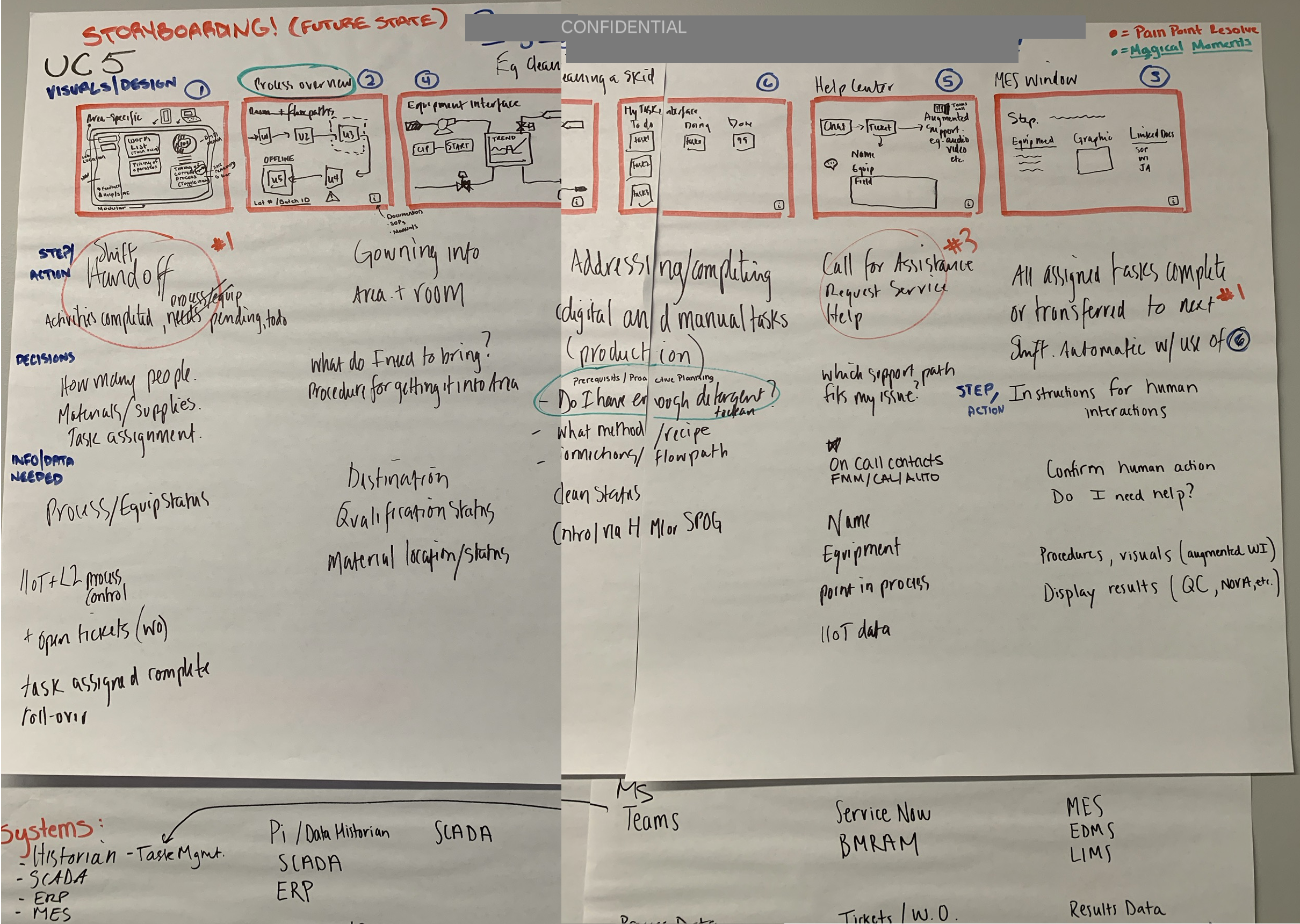
With a shared understanding of the problem, the team turned research into vision through ideation storyboarding.
Storyboards served as the bridge between discovery and design. By mapping how a Bioproduction Specialist would move through a future experience, the team could validate priorities, surface gaps, and build shared ownership of the direction early.
✺ ALIGNING ON DESIGN PRINCIPLES
Before getting into more polished designs, the team aligned on design principles to guide the future state experience
These principles gave the team a shared language for evaluating decisions and ensured the final product stayed true to what the research revealed.
Communication
Clear, real-time information exchange across all teams
Interconnectivity
Unified access to data across all enterprise systems
Automation
Routine tasks handled by the system, not the operator
Relevant Visibility
The right information, at the right time, for each user
Trust
Reliable data and interactions operators can depend on
✺ FINAL DESIGN OVERVIEW
From disconnected, fragmented systems to one cohesive experience
The result of the workshop, the research, and months of iterative design is a platform estimated to save Manufacturing 54,000 annual hours operators. Our final solution replaces fragmented workflows with a unified experience built around how operators actually work, not how systems were built.
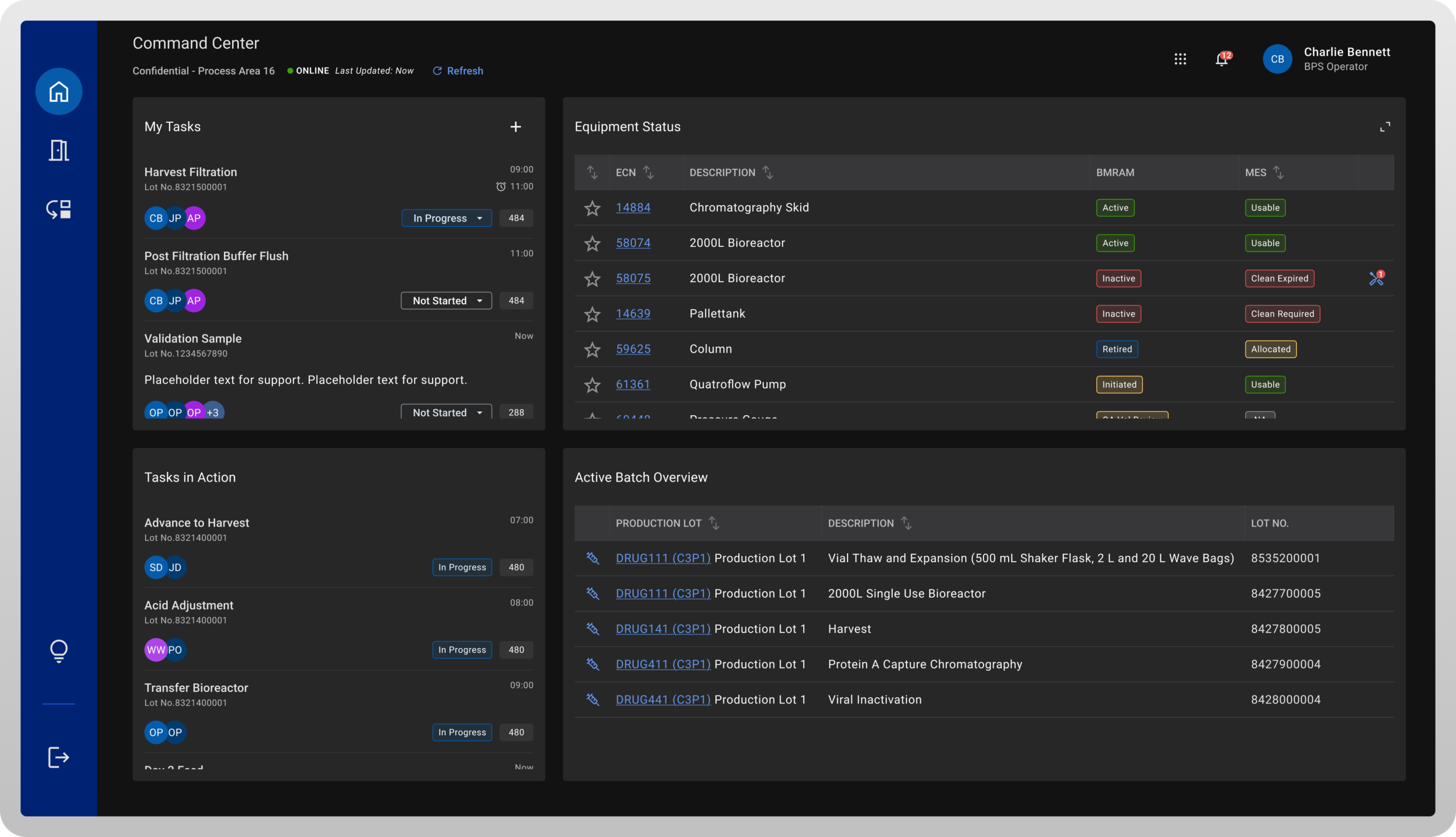
Command Center
BEFORE
Operators began every shift by piecing together information from multiple systems, checking equipment statuses in one tool, locating tasks in another, and tracking batch progress somewhere else.
NOW ✸
Operators have access to a single, real-time dashboard giving them everything they need before and during their shift, all in one place and tailored to their location.
IMPACT ✸
Estimated to save 814 annual hours per operator.
Final design screenshot [Identifying data has been scrubbed]
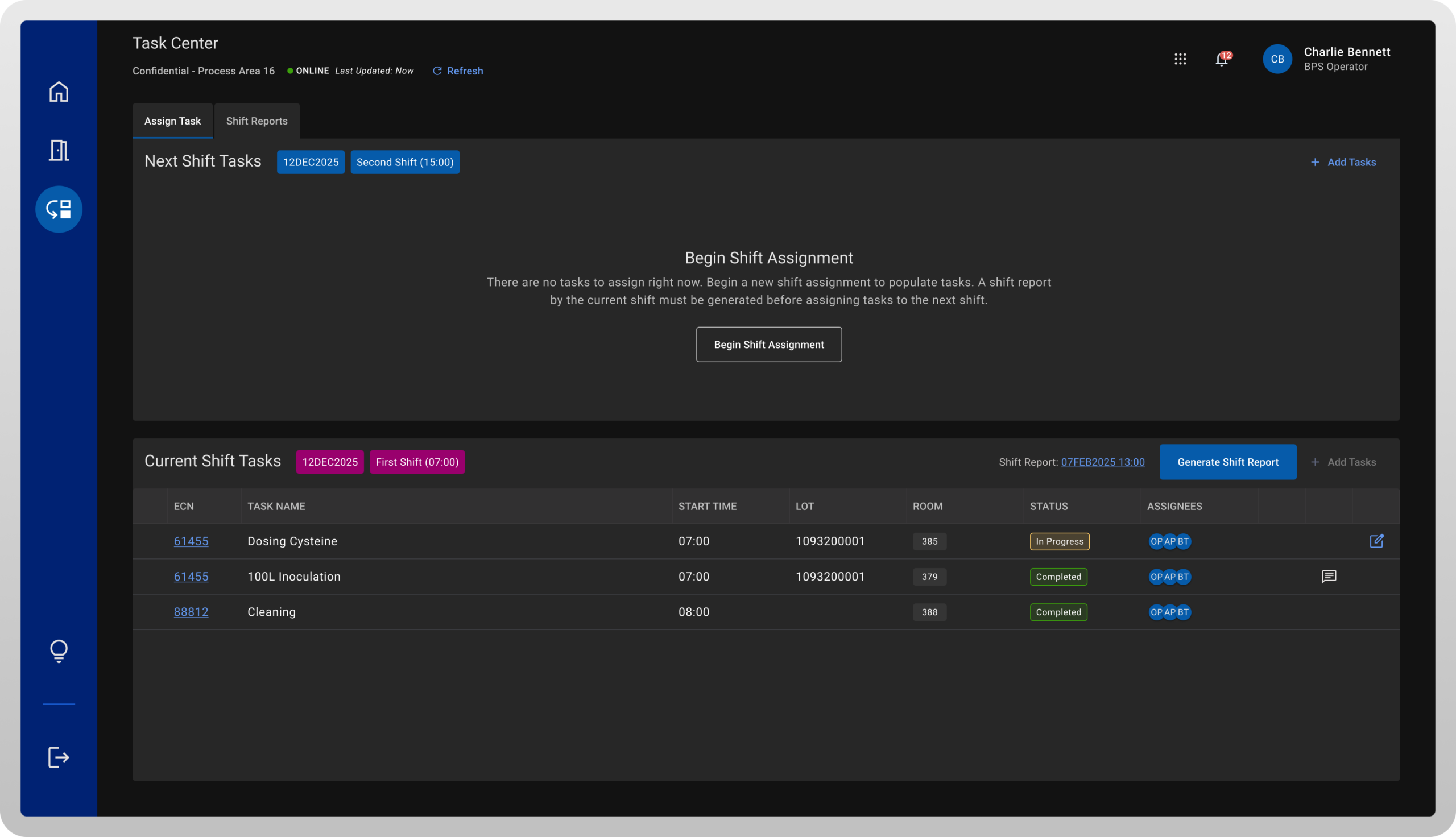
TASK CENTER
BEFORE
Shift handoffs were one of the most friction-heavy moments in the day. Tasks were communicated over email, details were lost between shifts, and leads spent significant time manually coordinating assignments.
NOW ✸
Leads have full visibility into shift coordination: assigning tasks, setting context, and handing off unfinished work seamlessly. Operators always know what's assigned to them and what's happening around them.
IMPACT ✸
Estimated to save ~867 annual hours per operator.
Final design screenshot [Identifying data has been scrubbed]
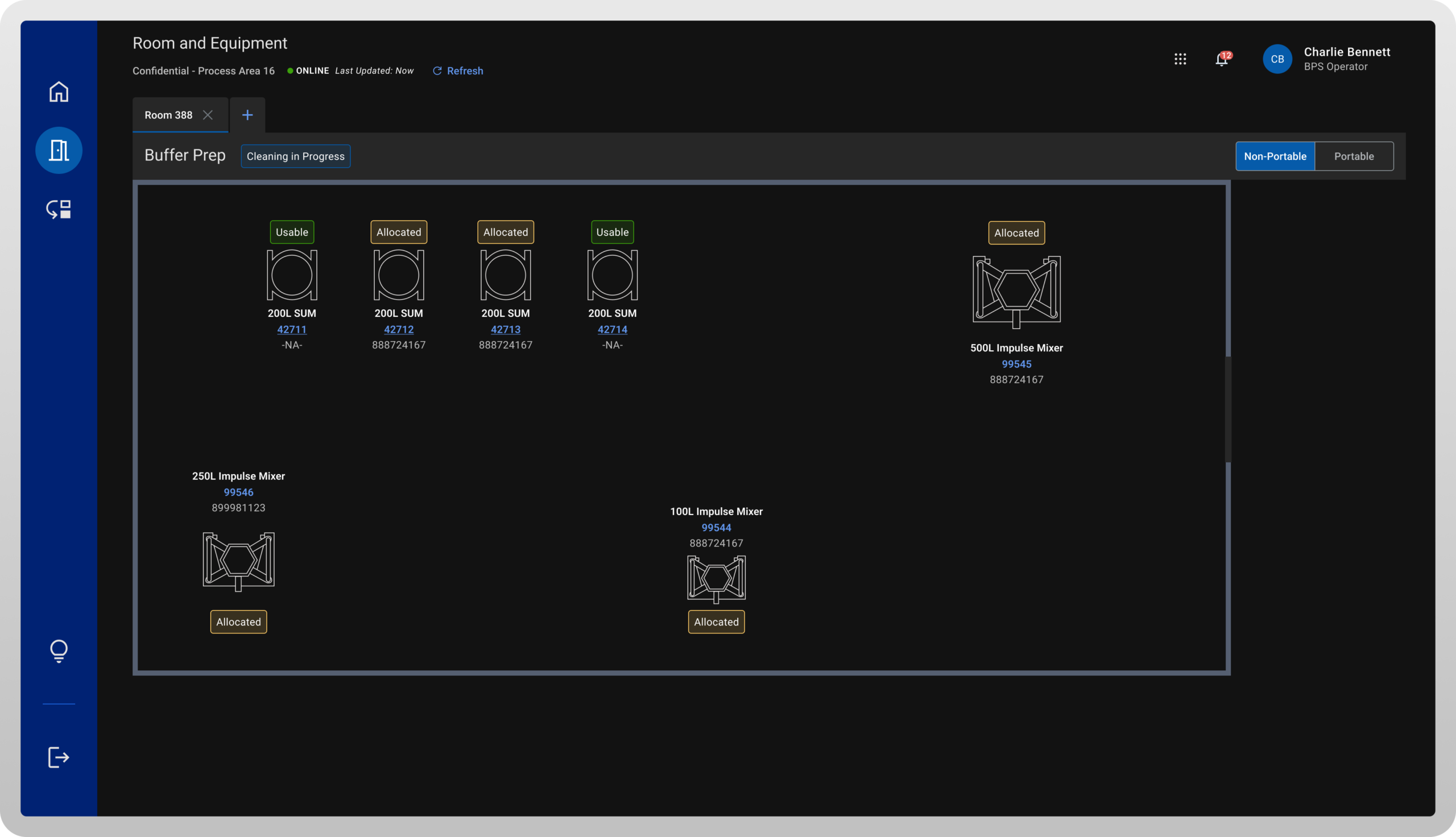
Room and Equipment
BEFORE
Accessing equipment documentation once meant physically entering a process area or navigating outdated maps, an unnecessary barrier to information operators needed in real time.
NOW ✸
This feature surfaces live equipment statuses, associated documents, graphs, and support contacts in one place. What previously required physical presence can now be done from anywhere.
IMPACT ✸
Real-time access. No context-switching required.
Final design screenshot [Identifying data has been scrubbed]
✺ MY ROLE
As UX Designer, my role extended well beyond the screen.
Iterative Screen Design
Weekly sessions to uncover new features and refine existing ones
Design System
Maintained and evolved the design system throughout the engagement
Cross-functional Collaboration
Partnered with architects and developers on API and integration challenges
Prototyping
Maintained a comprehensive end-to-end prototype for stakeholder demos
QA Testing
Front-end testing with findings logged in JIRA to ensure quality
Take a look at my other projects 𓀙
Designing a tool to enhance production operationsIBM Consulting
Shaping the future of Ulta Events through UXRIBM Consulting

JM Product VisionIBM Consulting