Shaping the future of Ulta Events through generative research with guests.
CLIENT
Ulta Beauty
TYPE
Insights & reccs
ROLE
User Researcher
FORM
Generative UXR
DURATION
July 2024
INDUSTRY
Retail
This was a generative research initiative focused on deriving quantitive insights to re-imagine Ulta’s in-store events.
As UX Researcher, I contributed to a generative research initiative that explored opportunities to reimagine Ulta's in-store events. I helped plan interviews, facilitated sessions with 15+ guests, and synthesized findings into actionable recommendations that informed Ulta's event strategy and digital experience roadmap.
Research revealed hidden opportunties in plain site
While Ulta's in-store events had potential to drive loyalty and revenue, a critical knowledge gap existed: guests weren't aware these events existed, and those who attended had unmet expectations.
Our challenge was to uncover what guests actually wanted from beauty events and identify opportunities to transform the experience through digital innovation.

We designed a mixed-methods approach to quantify qualitative insights
To explore the event opportunity systematically, we established clear reserach goals.
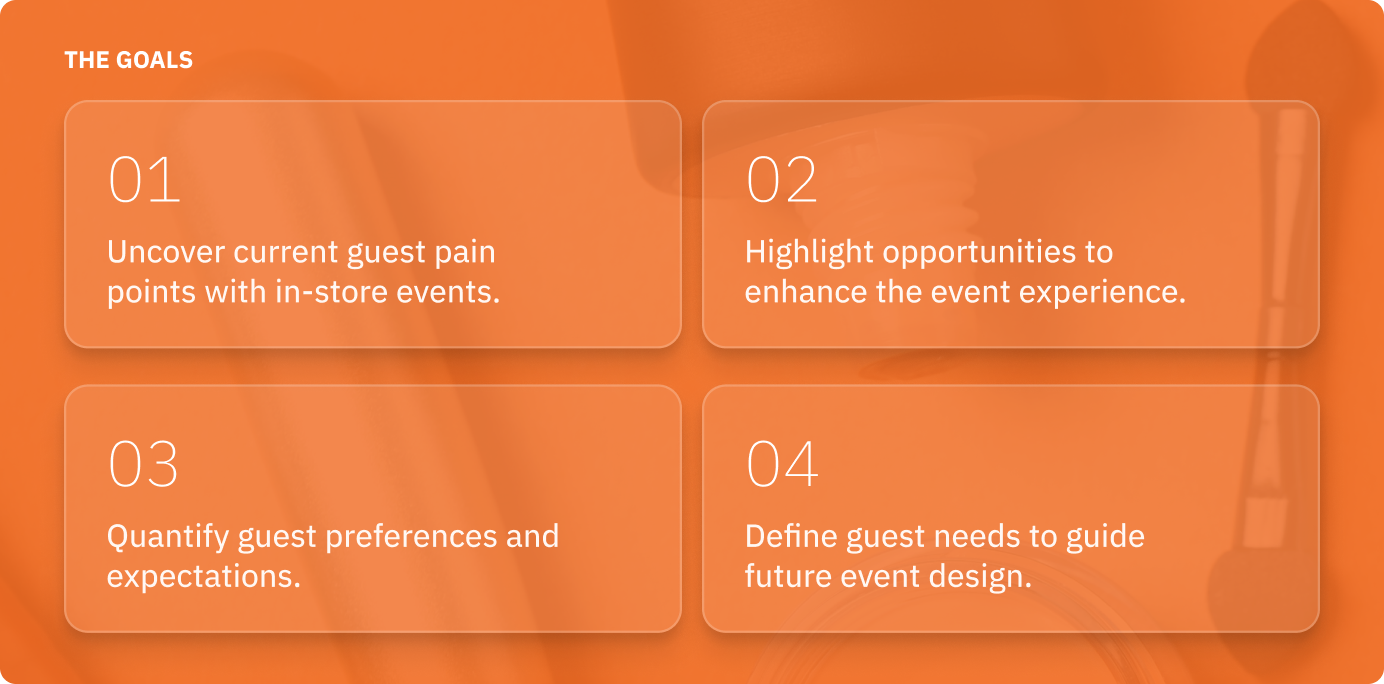
We conducted 15+ interviews with guests who ranged in loyalty, shopping frequency, and age group.
Using a real-time pain point tracker, we converted qualitative insights into quantitative data patterns. This enabled us to identify demographic trends and prioritize opportunities.
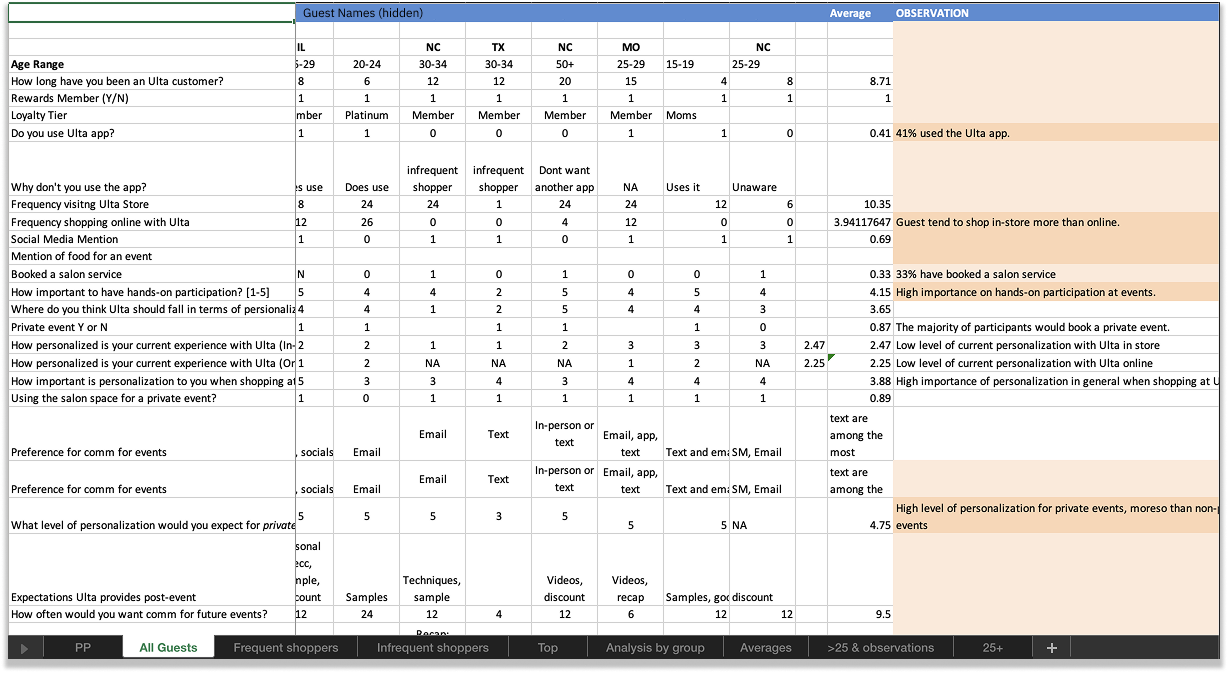
Screenshot of one page in the pain point tracker
Synthesis revealed 4 key insights
Our synthesis organized findings around the complete guest journey: Pre-Event, Booking & Payment, Private Events, Event Experience, and Post-Event. This structure helped stakeholders understand not just what guests wanted, but when digital interventions could have maximum impact.
**To protect client confidentiality, detailed insights are not published here. Please reach out to learn more.
Key Finding 1 of 4
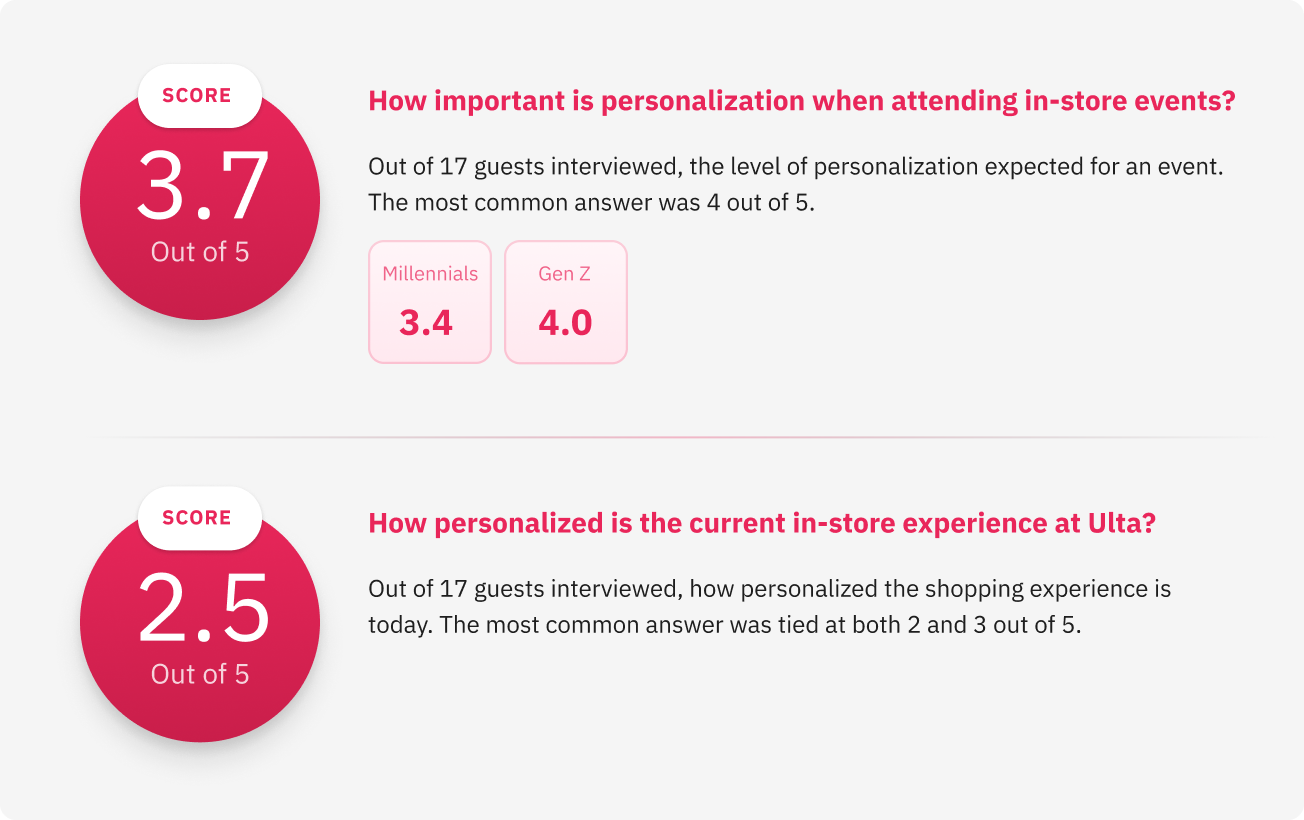
Personalization isn't a nice-to-have, it's a baseline.
Guests expect to leave events with products tailored to their needs, notably, 74% of Gen Z believe in-person experiences are more valuable than digital ones, and they prefer making purchases in-store.
 Opportunity: Introduce digital features that provide personalized product recommendations aligned with each guest’s unique needs and preferences.
Key Finding 2 of 4
Attendance gap presented the biggest growth opportunity
Despite the potential value, none of the guests we interviewed had attendended an event. Third-party survey data confirmed this: only 17% of the 365 participants has attended an event.
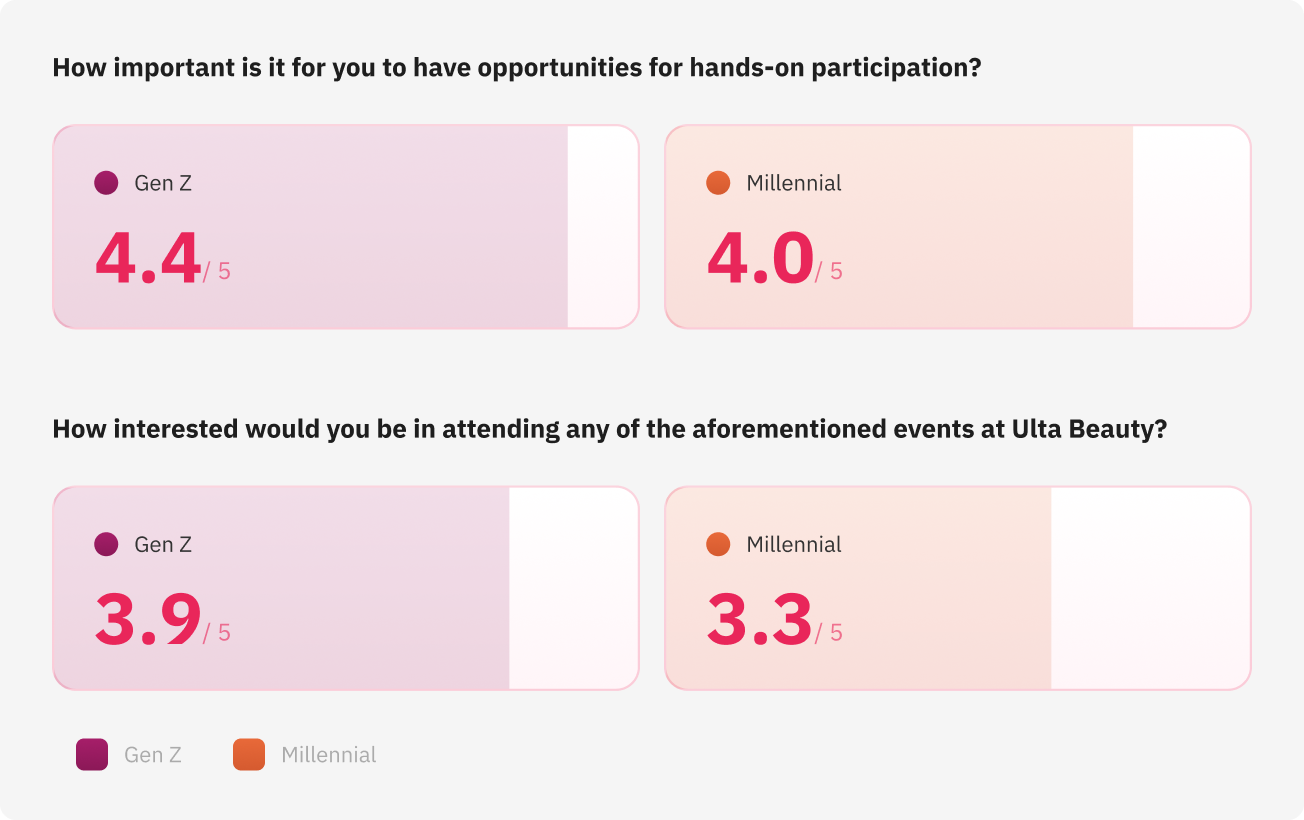
However, motivations varied by generation:
- Millennials valued information recaps, tutorial videos, and discounts
- Gen Z was motivated by samples and free gifts
Opportunity: Design digital features that build awareness and incentivize repeat attendance, tailored to generational preferences.
To protect client confidentiality, detailed insights are not published here. Please reach out to me personally to learn more.
My role
 Research Planning: Collaborated on interview protocol design and participant recruitment strategy
 Facilitation: Conducted interviews and maintained real-time pain point tracking
 Data Analysis: Synthesized qualitative insights into quantifiable patterns and trends Strategic Translation: Converted findings into actionable recommendations for stakeholder readout
Impact
For IBM, this initative was able to secure the team a contract with Ulta spanning over a year. The IBM team was able to secure seats for resources in the product owner space.
Lessons Learned: Quantifying qualitative research amplifies impact
This project reinforced the power of structured synthesis methods like our pain point tracker, converting rich qualitative insights into data patterns that stakeholders could act on with confidence. The journey-based presentation format also worked for helping teams understand not just what to build, but when and why.
Take a look at my other projects 𓀙
Designing a tool to enhance production operationsIBM Consulting
Building a custom tool for manufacturing operationsIBM Consulting

JM Product VisionIBM Consulting